
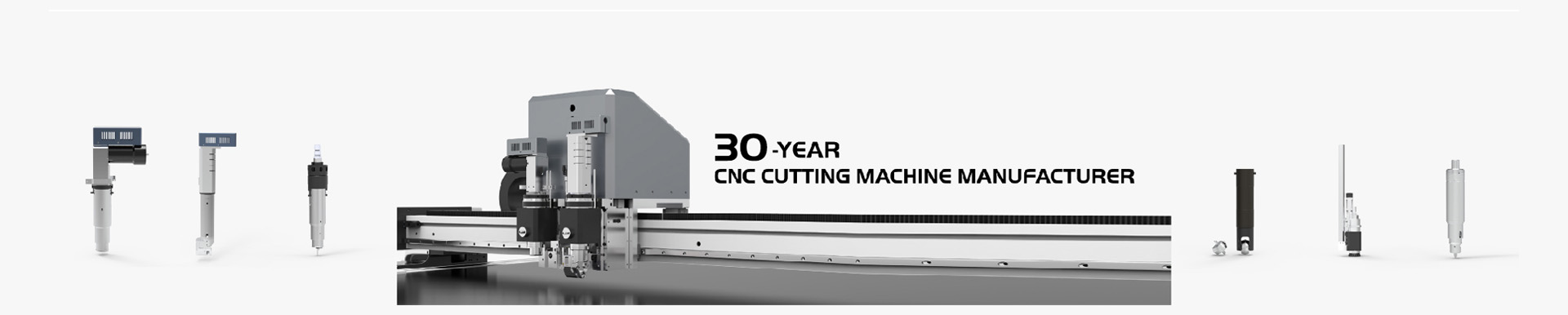
The global furniture manufacturing industry is undergoing a profound transformation driven by automation, digitalization, and intelligent production systems. Among emerging markets in Europe, Poland has become a strategic hub for furniture production, exporting large volumes of upholstered furniture, sofas, and customized interior products.In this context, the adoption of advanced cutting automation is accelerating rapidly. Traditional manual cutting methods—once the backbone of upholstery production—are increasingly unable to meet modern demands for precision, speed, and material efficiency. Manufacturers are now turning to smart systems such as the intelligent furniture cutting machine to achieve higher productivity and consistent quality.
This article explores how modern CNC-based cutting systems are reshaping furniture factories in Poland, and how integrated automation is redefining production workflows across leather, fabric, and foam processing.
The Evolution of Furniture Cutting Technology
Furniture manufacturing has always relied heavily on cutting processes, as the quality of cutting directly determines the final product performance and overall cost efficiency in the production of sofas, chairs, mattresses, and custom upholstery. However, traditional cutting methods—such as manual marking, hand cutting, and semi-automatic tools—come with significant limitations, including high dependence on skilled labor, inconsistent cutting accuracy, substantial material waste, low scalability for mass production, and time-consuming pattern adjustments. As global competition intensifies, these inefficiencies increasingly weaken the competitiveness of factories, particularly in export-driven markets like Poland. In response, the rise of CNC automation has become a key turning point in the industry. The introduction of CNC (Computer Numerical Control) systems enables digitally controlled precision cutting, automated nesting and layout optimization, repeatable accuracy across production batches, and significantly reduced reliance on manual labor. Today, advanced solutions such as the CNC cutting machine for furniture industry have become essential equipment for manufacturers seeking to modernize production lines and achieve higher efficiency, consistency, and cost control.
Intelligent Manufacturing in the Polish Furniture Industry
Poland has become one of Europe’s leading furniture exporters, serving both domestic and international markets. To maintain its competitive position, Polish manufacturers are rapidly adopting smart manufacturing technologies in response to structural changes in the industry.Several key factors are driving this transformation, including rising labor costs across Eastern Europe, increasing demand for customized furniture, shorter delivery cycles required by global buyers, higher raw material costs that necessitate waste reduction, and growing expectations for consistent product quality. Under these combined pressures, automation is no longer an optional upgrade but a fundamental requirement for sustainable growth.
Intelligent production systems enable factories to achieve faster order fulfillment, more stable product quality, reduced production costs, and flexible small-batch manufacturing capabilities. In this context, cutting systems are increasingly becoming the core of digital production workshops, acting as the critical bridge between design and manufacturing while significantly improving overall operational efficiency.
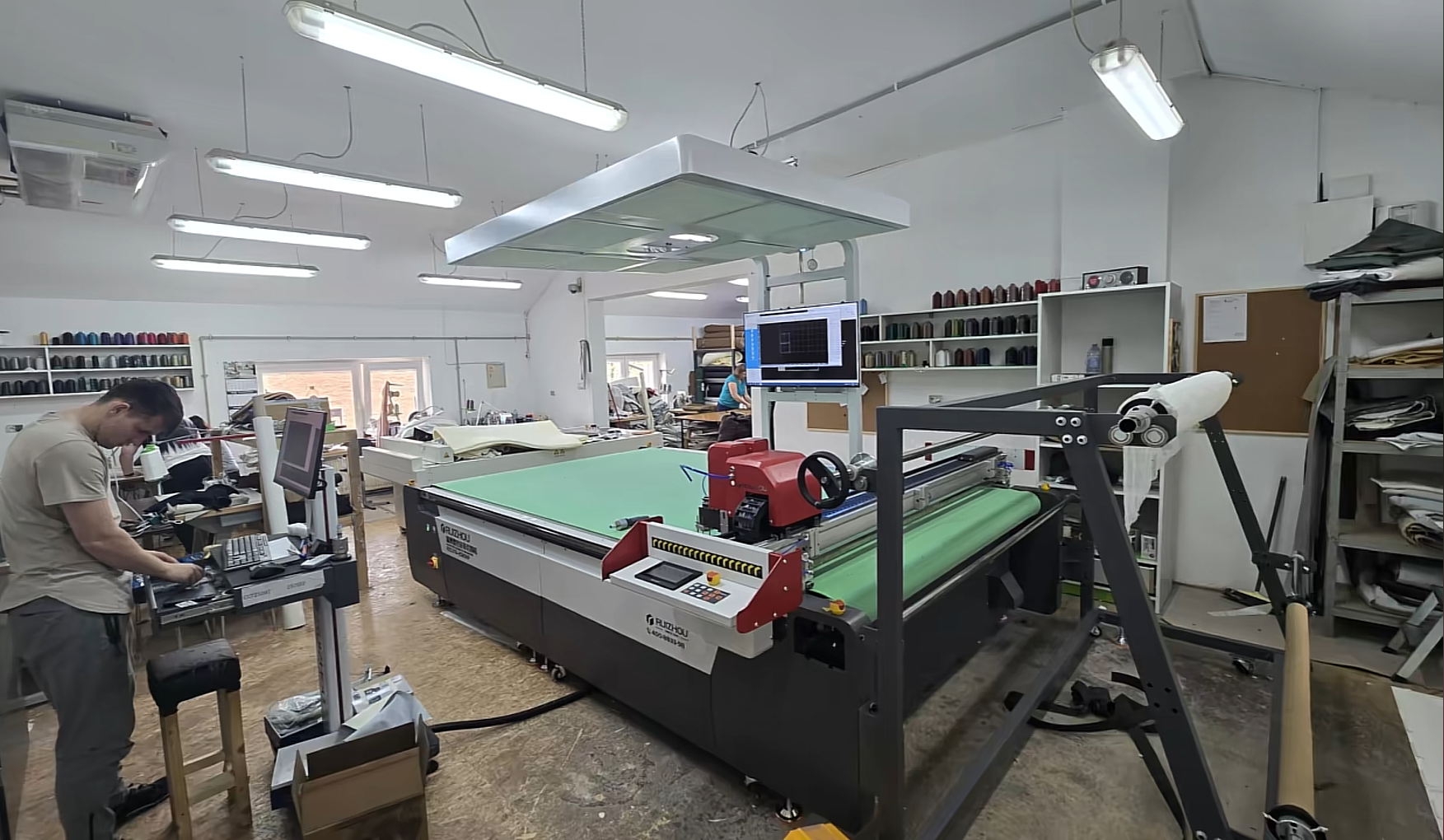
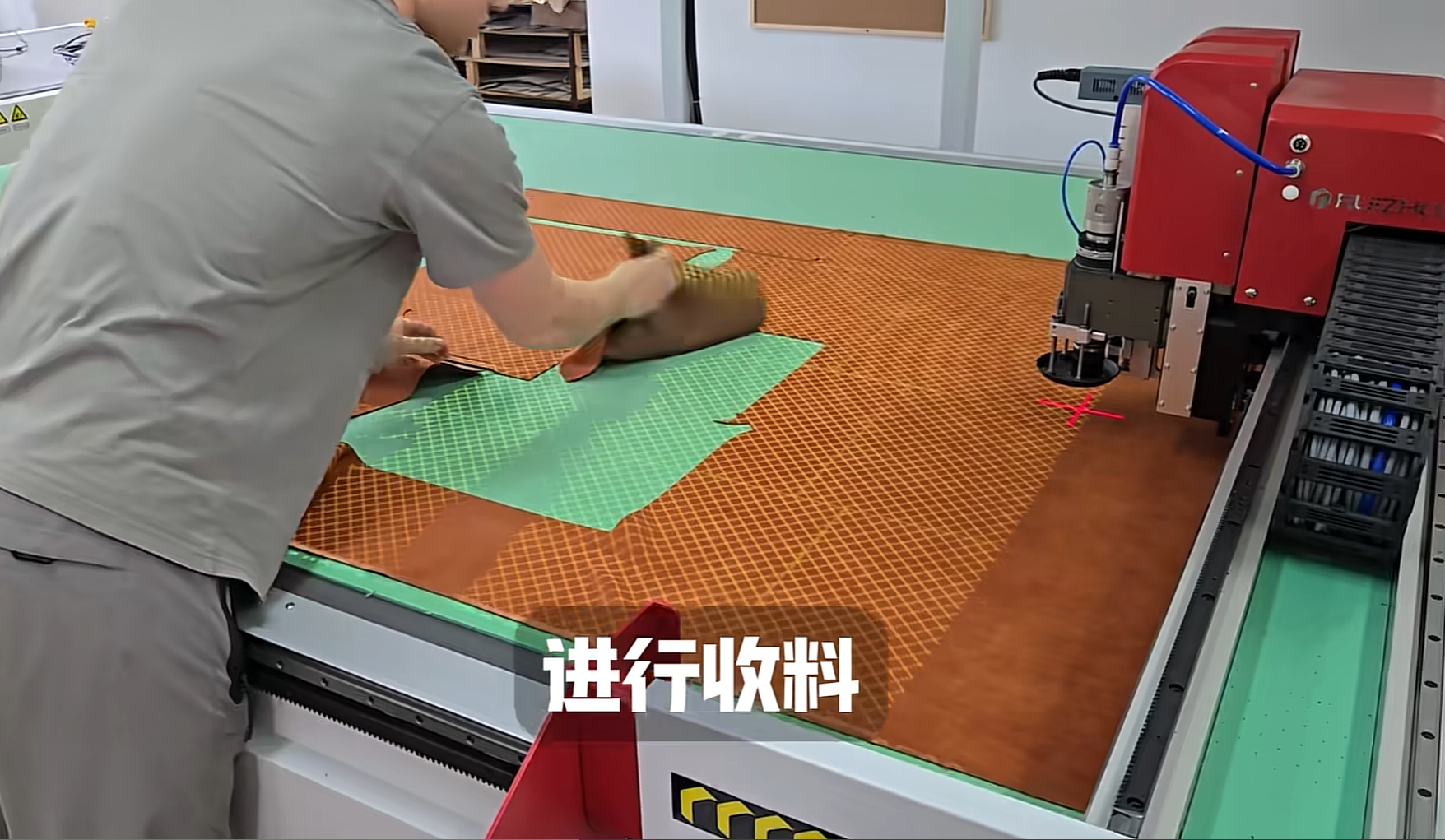
Modern furniture cutting systems integrate mechanical engineering, software optimization, and automation control to handle complex soft materials with high precision, forming the technological core of intelligent production. A typical intelligent cutting solution consists of digital design and nesting software, an automatic material feeding system, a CNC cutting platform, a vacuum adsorption table, and multi-tool cutting heads, enabling a seamless workflow from design to finished cut components. One of the key advantages of these systems is their strong material compatibility, allowing efficient processing of natural leather, PU synthetic leather, fabric textiles, sponge and foam materials, as well as composite upholstery layers, making them highly suitable for diversified furniture manufacturing environments. Among these applications, foam processing plays a critical role in sofa and mattress production, where traditional methods often suffer from uneven edge quality, material deformation, low repeatability, and high waste rates. A modern PU foam cutting machine addresses these challenges through high-speed oscillating knife systems, precision-controlled cutting paths, stable compression-free processing, and optimized nesting strategies that significantly reduce material waste and improve productivity. Similarly, leather cutting remains a demanding process in high-end furniture manufacturing due to the natural irregularities and defects of raw hides, which often result in inconsistent shapes, low yield efficiency, high reliance on skilled labor, and material loss from misalignment. The leather cutting machine CNC system solves these issues through high-precision digital pattern alignment, automatic defect avoidance via intelligent nesting software, clean and smooth cutting edges, and improved utilization of high-value raw materials, making it especially valuable for premium sofa and luxury seating production. Furthermore, modern furniture factories increasingly require flexible material processing capabilities, as production lines must handle multiple materials within a single workflow. A soft material cutting machine enables multi-material switching without hardware changes, fast pattern adjustments for customized orders, efficient small-batch production, and seamless integration with design software, making it an essential tool for OEM and ODM manufacturers operating in global markets.
Smart Nesting and Automation Driving Higher ROI in Furniture Production
Smart nesting is one of the most impactful innovations in modern cutting systems, focusing on software-based material layout optimization before cutting to maximize material utilization by arranging patterns in the most efficient way. Through this technology, factories can significantly reduce material waste, improve cost efficiency per unit, accelerate production preparation, and minimize human errors in layout planning. In large-scale furniture manufacturing environments, even small improvements in material usage can translate into substantial annual savings. Building on this efficiency foundation, modern furniture production has evolved from a linear workflow into a fully integrated digital process. A typical automated production system combines CAD design input, digital nesting optimization, automated material feeding, CNC cutting execution, and final sorting and packaging, creating a seamless end-to-end manufacturing chain. This integrated workflow reduces labor intensity, shortens production cycles, improves consistency, and increases overall throughput capacity, allowing factories to scale operations without proportional increases in workforce. From an economic perspective, investment in intelligent cutting systems is driven primarily by return on investment rather than equipment cost alone. Key cost reduction factors include lower labor dependency, reduced material waste, higher production speed, and fewer defective outputs, all of which contribute to faster payback periods, increased order capacity, and improved profit margins. In highly competitive markets such as Poland, these advantages play a crucial role in ensuring long-term industrial sustainability and manufacturing competitiveness.
Future of Smart Furniture Manufacturing in Poland
The transformation of Poland’s furniture manufacturing industry is being shaped by automation, digitalization, and intelligent cutting technology. From leather sofas to foam-based upholstery, advanced CNC systems are redefining how factories operate, improving efficiency while reducing costs and material waste. As global demand for customized and high-quality furniture continues to rise, intelligent cutting systems will remain at the center of industrial innovation. Factories that adopt these technologies early will gain a significant competitive advantage in productivity, flexibility, and profitability.Company Website:www.ruizhoucnc.com