
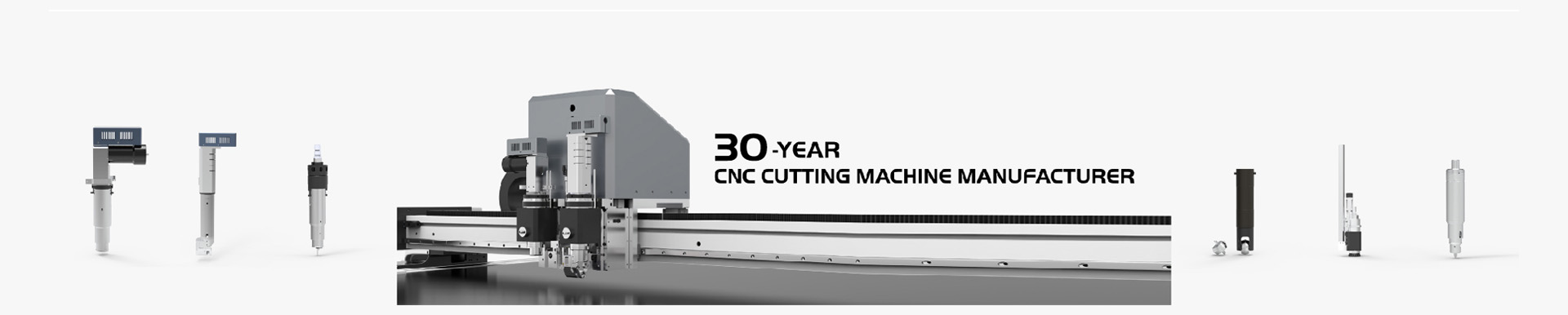
At GISMA 2026 in Guangzhou, the spotlight falls on a single breakthrough solution that reflects the future direction of footwear material processing. RUIZHOU presents one advanced AI-driven system, introduced to global visitors through a personal invitation from Mr. Guo, emphasizing not quantity of models but depth of innovation. This exhibition moment is centered on a highly integrated smart leather cutting machine designed to modernize how leather components are prepared for shoe manufacturing. The system demonstrates how artificial intelligence, precision motion control, and automated workflow design can merge into one seamless production platform that delivers measurable gains in efficiency, consistency, and material utilization.

Footwear manufacturing has always balanced craftsmanship with industrial scalability. Leather, as a natural material, introduces variability that complicates automation. Differences in grain direction, thickness, elasticity, and surface defects require careful evaluation before cutting even begins. Traditionally, this responsibility fell to experienced workers who manually inspected each hide, marked defects, and arranged cutting patterns by hand. While effective, this approach limits speed, depends heavily on skill availability, and creates inconsistencies between shifts or facilities. RUIZHOU’s exhibition system addresses these challenges at their root by digitizing and automating the decision-making process that once relied entirely on human judgment.
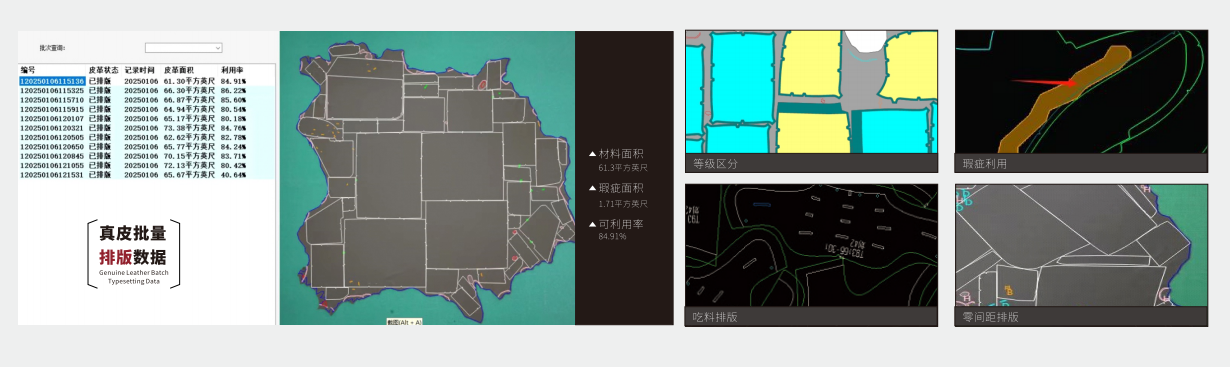
For shoe factories specifically, the system’s configuration as a specialized leather cutting machine for shoes delivers practical advantages. Shoe uppers consist of many small, irregularly shaped components that must align accurately during assembly. The AI nesting software understands these shapes and arranges them efficiently within the natural boundaries of each hide. It also respects grain direction requirements, ensuring that parts subject to stress or flexing are oriented for durability. Over time, this intelligent nesting can significantly increase material utilization rates, directly reducing raw material costs, which represent a major portion of footwear production expenses.
AI Scanning and Intelligent Nesting Integration
The nesting engine then uses this data to position cutting patterns in a way that balances yield optimization with quality control. Instead of simply packing shapes tightly, the software considers multiple production rules simultaneously. It aligns pieces according to grain direction, prioritizes visible components for higher-quality zones, and avoids areas where structural weakness might affect durability. Because these decisions are algorithm-driven, every hide is processed with the same criteria, improving consistency across large production runs.This digital workflow also enables data tracking and analysis. Factories can monitor average material utilization rates, defect frequency by supplier, and cutting time per batch. Over weeks and months, this information becomes a valuable management resource. Procurement teams can evaluate hide quality trends, engineers can refine pattern layouts, and production managers can forecast material needs more accurately. In this way, the smart leather cutting machine becomes not just a production tool but also a data platform supporting continuous improvement.
Precision Motion and Cutting Stability
While intelligence defines the system’s decision-making, mechanical precision ensures those decisions are executed flawlessly. The cutting unit uses a high-frequency oscillating knife designed to handle the fibrous structure of leather cleanly. The motion platform is driven by servo motors and stabilized guide systems that maintain smooth, vibration-controlled movement even during high-speed operation. This stability prevents jagged edges and dimensional drift, both of which can disrupt later assembly steps.Because the machine operates as a top-tier leather cnc cutting machine, its control system translates digital patterns into exact physical movements. Complex curves, small notches, and alignment marks are reproduced with high repeatability. For footwear manufacturers producing multiple sizes and styles, this repeatability ensures that grading differences are respected accurately and that parts fit together as designed. Reduced dimensional variation leads to smoother sewing operations and fewer rejected components.
The system’s role as an automatic leather cutting machine also improves workflow balance. Cutting speed becomes predictable, allowing production planners to synchronize upstream material preparation and downstream assembly processes. Instead of unpredictable delays caused by manual marking or layout adjustments, factories gain a steady, reliable cutting rhythm that supports lean manufacturing principles.
Durability is another essential factor in industrial environments. RUIZHOU has designed the structure to withstand continuous operation, using reinforced frames, industrial-grade electronics, and thermal management systems that protect components during long shifts. This reliability ensures that the cnc machine for leather cutting maintains accuracy over time, preserving performance and reducing maintenance-related downtime.
Digital Transformation in Footwear Manufacturing
The presentation of this system at GISMA 2026 highlights a broader shift toward digital production ecosystems. Footwear design is increasingly digital, with CAD systems generating patterns and size gradings electronically. By connecting directly to these digital design files, the leather cutting machine for shoes eliminates intermediate steps such as physical templates or manual pattern tracing. Design updates can be implemented instantly, supporting rapid product development cycles and small-batch customization.RUIZHOU’s focus on a single advanced platform at GISMA underscores a strategic message: meaningful innovation comes from integrating technologies deeply rather than multiplying model variations. By combining AI scanning, intelligent nesting, and precision CNC cutting into one cohesive solution, the company demonstrates how the future of leather processing lies in unified digital workflows.
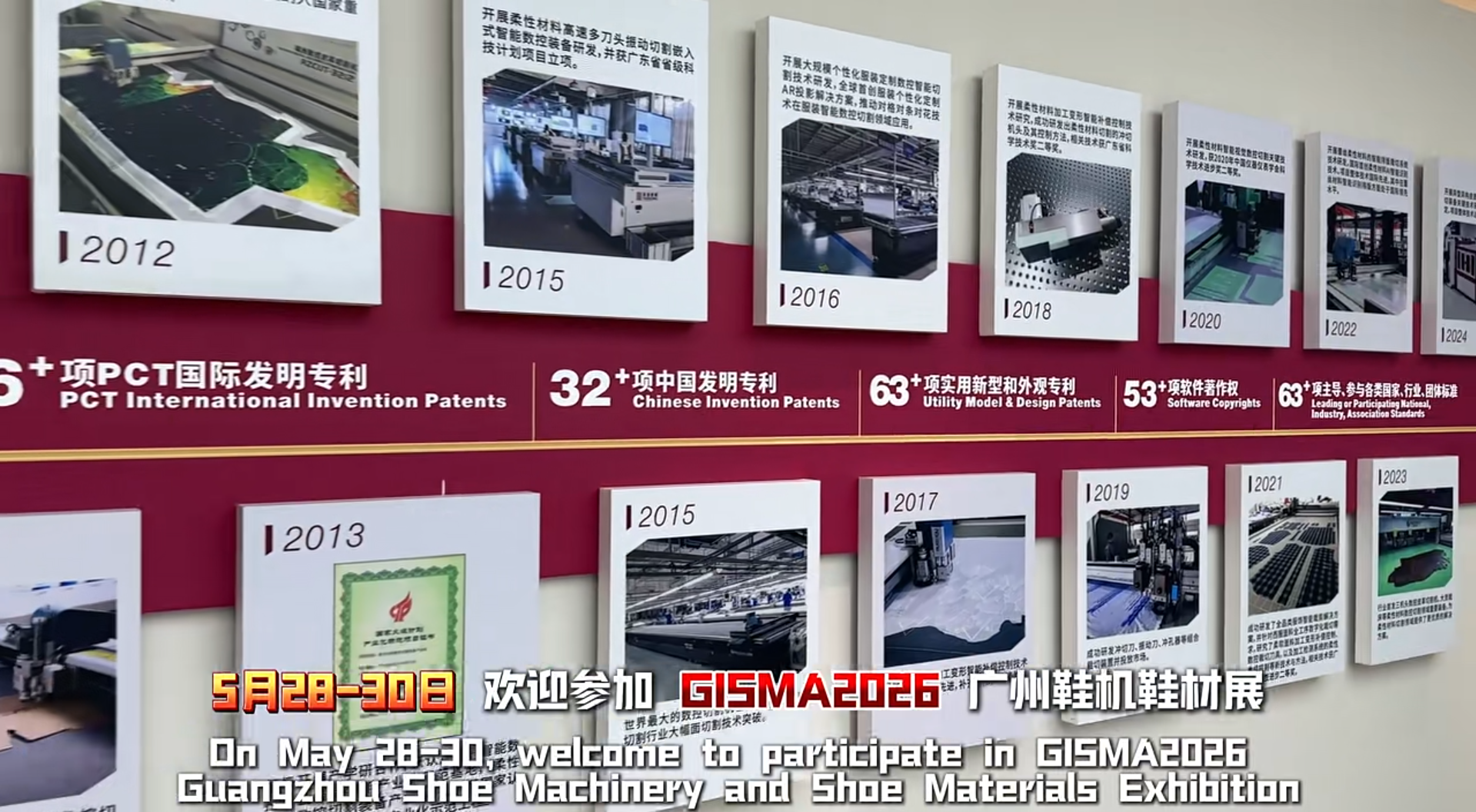
Visitors to the exhibition witness a complete cycle in action, from hide placement to finished cut components. The demonstration illustrates not only speed and precision but also the reduction of manual handling and subjective decision-making. This transformation enables footwear manufacturers to move toward standardized, data-driven production models that are easier to scale and manage across multiple facilities.Support infrastructure further strengthens this transition. RUIZHOU provides technical consultation, application guidance, and ongoing software development to ensure that each automatic leather cutting machine continues to align with evolving industry needs. Detailed information about the system, technical specifications, and service resources is available at www.ruizhoucnc.com, offering manufacturers a direct channel to explore implementation strategies.
By centering its GISMA 2026 presentation on o ne highly integrated leather cnc cutting machine, RUIZHOU communicates confidence in the maturity and capability of its AI-driven technology. The system embodies the convergence of intelligent recognition, automated optimization, and precise mechanical execution. As a specialized leather cutting machine for shoes, it addresses the practical realities of footwear production while introducing a new level of digital control.