What Garment Factory Owners Must Know Before Investing in a CNC Garment Cutting Machine
2026-04-16
The global garment manufacturing industry is undergoing a structural transformation. Over the past decade, rising labor costs, increasing order complexity, and faster delivery expectations have forced factories to rethink traditional production methods.
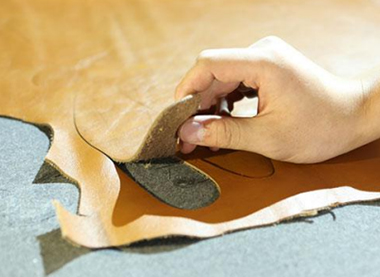
In the past, garment production relied heavily on manual cutting. Skilled workers used hand tools, experience, and physical templates to cut fabric layers. While this method worked in the past, it is now becoming inefficient and costly in modern manufacturing environments.
Today, brands expect:
Faster production cycles
Lower costs per unit
Higher consistency
Smaller batch flexibility
Faster sample development
These demands are becoming increasingly difficult to meet with traditional production systems, which lack the speed, flexibility, and efficiency required by today’s garment industry. As a result, more and more factories are turning to the CNC Garment Cutting Machine, a core technology in modern apparel automation that helps improve precision, reduce costs, and enhance overall production efficiency. However, many factory owners still face important concerns before making the investment, such as whether it is truly worth the cost, how quickly the machine can deliver a return on investment, whether it is suitable for their factory scale, and what potential risks should be considered in advance. This article provides a comprehensive analysis of these questions from both technical and business perspectives to help manufacturers make a more informed decision.
The Real Problem With Traditional Garment Cutting Systems
To understand why automation is necessary, we must first examine the limitations of manual cutting.
1
Labor Dependency and Rising Costs
Traditional garment cutting depends heavily on skilled labor. However, global labor conditions are changing rapidly.
Factories now face:
Increasing wages year after year
Shortage of skilled workers
High turnover rates
Training costs for new employees
This creates instability in production planning.
2
Human Error and Quality Variation
Even highly experienced workers cannot maintain perfect consistency over long production cycles.
Common issues include:
Small cutting deviations
Pattern misalignment
Layer inconsistency
Fatigue-related errors
These issues directly affect final product quality.
3
Fabric Waste Problem
Fabric is one of the most expensive materials in garment manufacturing.
Without intelligent layout optimization:
Fabric utilization is not maximized
Waste rates remain high (10–15%)
Profit margins are reduced
This is where automation becomes essential.
4
Production Bottlenecks
Manual cutting limits scalability.
Even if demand increases, production speed cannot easily scale due to human limitations.
The Real Problem With Traditional Garment Cutting Systems
To understand why automation is necessary, we must first examine the limitations of manual cutting.
Traditional garment cutting depends heavily on skilled labor. However, global labor conditions are changing rapidly.
Factories now face:
Increasing wages year after year
Shortage of skilled workers
High turnover rates
Training costs for new employees
This creates instability in production planning.
Even highly experienced workers cannot maintain perfect consistency over long production cycles, which often leads to human error and quality variation in garment manufacturing. Common issues such as small cutting deviations, pattern misalignment, layer inconsistency, and fatigue-related mistakes directly impact the final product quality and increase the rate of defects. In addition, fabric waste remains a significant challenge in traditional production, as fabric is one of the most expensive materials in garment manufacturing. Without intelligent layout optimization, fabric utilization is not maximized, waste rates can remain as high as 10–15%, and overall profit margins are reduced, making automation increasingly necessary. Furthermore, manual cutting processes create serious production bottlenecks, limiting scalability even when market demand increases, since production speed cannot easily expand due to human capacity constraints.
What Is a CNC Garment Cutting Machine?
A CNC Garment Cutting Machine is not just a cutting tool—it is a fully automated production system.
It combines:
CNC mechanical cutting system
Digital pattern control software
Intelligent nesting system
Automated workflow execution
The CNC Precision Cutting System ensures high accuracy cutting, stable repeated performance, multi-layer cutting capability, and minimal deviation, providing a strong foundation for consistent production quality. One of its most important components is the AI Fabric Cutting System, which automatically analyzes pattern shapes, optimizes layout arrangement, reduces fabric waste, and improves overall material utilization, making production far more efficient. In addition, modern systems integrate a digital workflow, allowing digital file input, automatic pattern recognition, and seamless production execution, which eliminates the need for manual marking and layout work. The key benefits of CNC Garment Cutting Machines are significant, especially in terms of labor cost reduction, where factories typically reduce cutting labor by 30%–50% as operators shift from manual work to system supervision. With AI optimization, fabric waste can be reduced from 10–15% to approximately 5–8%, directly increasing profit margins. A High Efficiency Textile Cutting Machine also improves production efficiency by operating continuously without fatigue, ensuring faster output, stable production speed, and no human limitations. Furthermore, it guarantees consistency in product quality, as every cut follows identical digital instructions, enabling standardized production, reduced defects, and improved brand consistency. Finally, automation significantly shortens production cycles, allowing faster order fulfillment, improved customer satisfaction, and stronger market responsiveness.
Why Suit Manufacturing Benefits Most
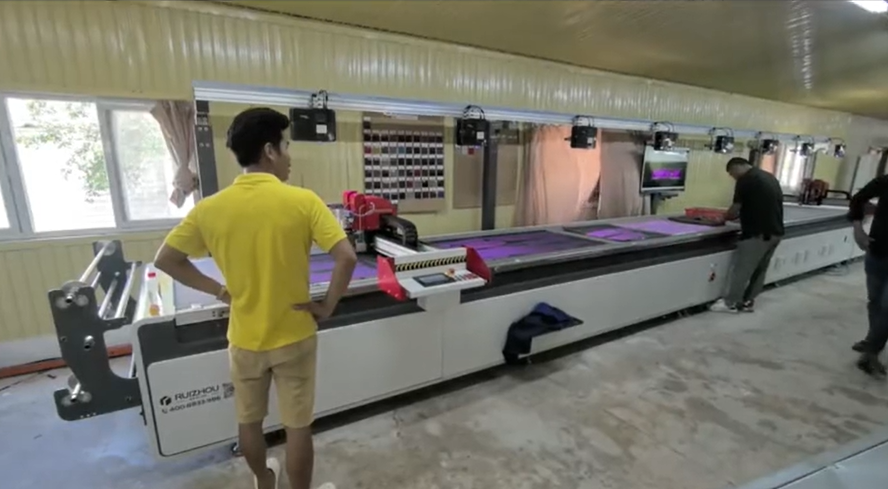
Suit production requires high precision, complex structures, premium materials, and symmetrical accuracy, making a Garment CNC Cutter for Suit Manufacturing an ideal solution as it ensures perfect pattern alignment, zero manual deviation, and consistent high-end finishing quality. From a technology perspective, the system works through a structured process: first, digital pattern files are uploaded into the system as the digital pattern input stage; then the AI nesting optimization system automatically arranges patterns, minimizes waste, and optimizes layout efficiency; next, the CNC system performs automated cutting execution, following precise cutting paths, supporting multi-layer processing, and enabling continuous operation; finally, output quality control ensures consistency before production continues. A real-world example can be seen in a garment factory in Cambodia, which upgraded to a 12-meter CNC system and achieved significant improvements, including 50% labor reduction, 12% fabric waste reduction, and doubled production efficiency, enabling a full transition from manual to automated production. However, buyers should avoid common mistakes such as choosing equipment based only on price, as low-cost machines often lack stability, precision, and long-term durability; ignoring software capability, where without AI nesting waste reduction and efficiency gains are limited; poor supplier selection, which increases downtime risk due to lack of after-sales support; and selecting the wrong machine size, which leads to inefficiency or underutilization. Investment in a CNC Garment Cutting Machine should be considered when factories face rising labor costs, production bottlenecks, high material waste, or skilled labor shortages. Overall, the future of garment manufacturing is moving toward full automation, AI-driven production, and smart factories, where manual cutting will gradually disappear in large-scale industrial production.